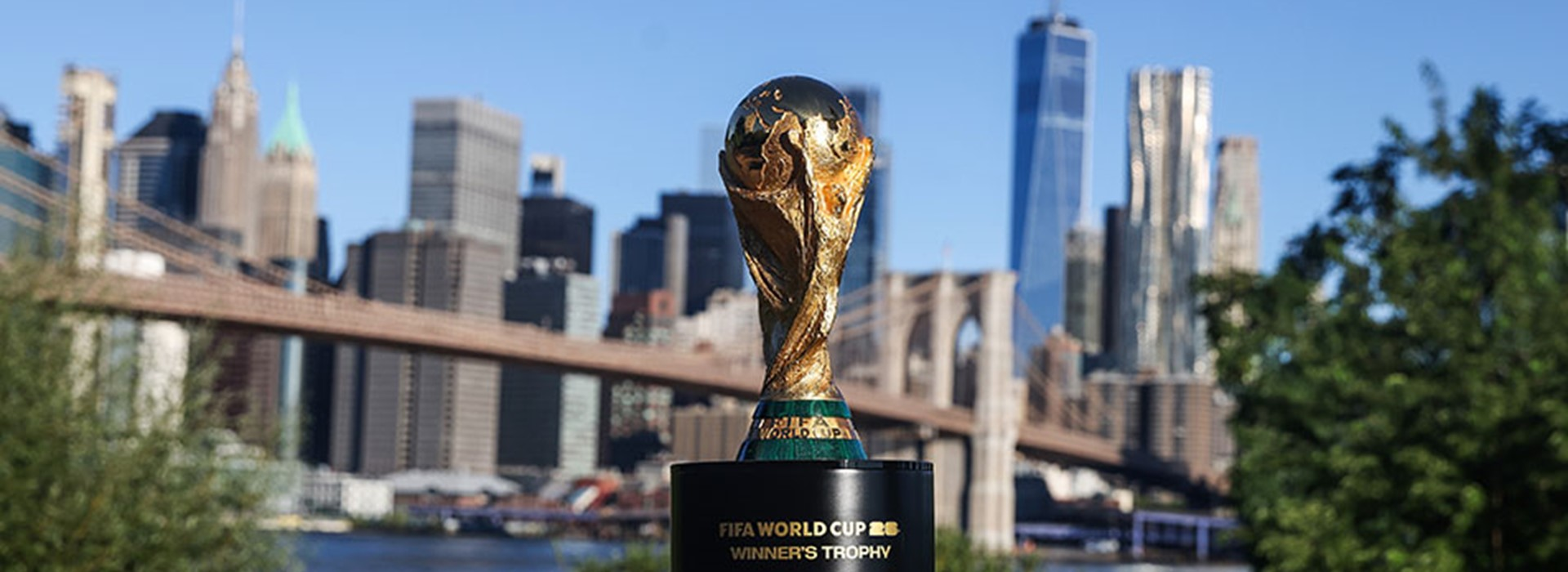
The biggest football tournament in history is almost here — and it's unlike anything we've ever seen before.
A Historic First: Three Nations, One Tournament
For the first time in the history of the FIFA World Cup, three countries are co-hosting the world's biggest sporting event. The United States, Canada, and Mexico — collectively known as the "United Bid" — will welcome the planet to North America for the 2026 FIFA World Cup™, running from June 11 to July 19, 2026.
This isn't just a logistical milestone. It's a statement. When the United Bid was officially selected on June 13, 2018, at the 68th FIFA Congress in Moscow, it beat Morocco 134 votes to 65. The vote itself was historic — for the first time ever, FIFA's full membership got to vote on a host selection. North America won by a landslide.
The tournament will span 16 cities, 16 stadiums, and 104 matches across three nations. That's a jump from 64 matches in Qatar 2022, and 48 teams instead of 32 — making this the largest World Cup ever staged.
Fun fact: The official match ball is called the Trionda — Spanish for "three waves" — a nod to the three host nations, with its red, green, and blue colour scheme.
🇺🇸 United States — The Main Stage
The US is hosting the lion's share of the action, with 78 matches including all games from the quarterfinals onward. North America last welcomed the World Cup in 1994, when Brazil lifted the trophy after beating Italy on penalties. That was 32 years ago. America is ready.
Key Stadiums
| Stadium | City | Capacity | Notable Matches |
|---|---|---|---|
| MetLife Stadium | New York/New Jersey | ~82,000 | FINAL (July 19) |
| AT&T Stadium | Dallas/Arlington | ~80,000 | Semi-Final — most matches of any venue (9) |
| Mercedes-Benz Stadium | Atlanta | ~71,000 | Semi-Final |
| SoFi Stadium | Los Angeles | ~70,000 | Opening match for USA (June 12) |
| Hard Rock Stadium | Miami | ~65,000 | Quarter-Final, Third-Place match |
| Levi's Stadium | San Francisco/Santa Clara | ~68,500 | Group stage + knockouts |
| Gillette Stadium | Boston | ~65,000 | Group stage + knockouts |
| Lincoln Financial Field | Philadelphia | ~69,000 | Group stage + knockouts |
| Arrowhead Stadium | Kansas City | ~76,000 | Group stage + knockouts |
| Lumen Field | Seattle | ~68,000 | Group stage + knockouts |
| NRG Stadium | Houston | ~72,000 | Group stage + knockouts |
🏟️ MetLife Stadium — The Grand Finale
There's no better way to close a World Cup than at MetLife Stadium in East Rutherford, New Jersey — just across the river from New York City. It's one of the largest stadiums in the world. Its hosting resume includes Super Bowls, concerts by Taylor Swift, Beyoncé, and the Rolling Stones. The 2026 World Cup Final on July 19 will be its greatest moment yet. FIFA president Gianni Infantino has also confirmed there will be a half-time show, with Coldplay involved in putting together the event — a nod to the Super Bowl tradition.
🏟️ AT&T Stadium — The House of Football
Located in Arlington, Texas, AT&T Stadium is an architectural masterpiece with a retractable dome and a colossal HD screen. It will host 9 matches — more than any other venue in the tournament. Dallas is a city that loves sport, with a thriving arts scene and legendary Tex-Mex cuisine to match.
🇲🇽 Mexico — Where Football Lives and Breathes
Mexico is hosting 13 matches across three iconic cities: Mexico City, Guadalajara, and Monterrey. But this isn't just Mexico's second rodeo — it's their third. Mexico becomes the first country in history to host three men's FIFA World Cups, having previously welcomed the world in 1970 and 1986.
The opening match of the entire tournament kicks off in Mexico City on June 11, 2026, at the legendary Estadio Azteca — with Mexico facing South Africa.
Key Stadiums
| Stadium | City | Capacity |
|---|---|---|
| Estadio Azteca | Mexico City | ~83,000 |
| Estadio Monterrey (BBVA) | Guadalupe, Monterrey | ~53,500 |
| Estadio Guadalajara (Akron) | Zapopan, Guadalajara | ~48,000 |
🏟️ Estadio Azteca — The Temple of Football
This is more than a stadium. The Azteca is a cathedral. With a capacity of around 83,000, it is one of the largest stadiums in the world and the only venue that has hosted three FIFA World Cup tournaments — 1970, 1986, and now 2026. Its history reads like a highlight reel of the sport's greatest moments: Pelé's brilliance in '70, Diego Maradona's "Hand of God" and "Goal of the Century" in '86, and now a new chapter in 2026. Mexico City is the only capital city among the three host nations to have a match venue — making the Azteca's role even more symbolic.
🇨🇦 Canada — A Nation Writing Its World Cup Story
Canada is hosting 13 matches across two cities: Toronto and Vancouver. For a country better known internationally for ice hockey, this is a moment of enormous national pride — and a signal that football (or soccer, as Canadians call it) has truly arrived.
It's also a double milestone for Canada: they become the fifth country to have hosted both the men's and women's World Cup (the women's tournament was held in Canada in 2015).
Key Stadiums
| Stadium | City | Capacity |
|---|---|---|
| BMO Field | Toronto | ~45,000 |
| BC Place | Vancouver | ~54,000 |
Canada's opening match takes place on June 12 at BMO Field in Toronto — the same day as the US's first match.
🏟️ BC Place — Football Meets the Pacific
Sitting in the heart of Vancouver with stunning views of the North Shore mountains, BC Place is the largest stadium in Canada. The retractable roof means weather will never be an issue. Vancouver's proximity to Seattle also makes it a natural stop for cross-border fans.
The Three Regions: How It's Organised
To manage the enormous geographic spread, FIFA grouped the 16 host cities into three travel-friendly regions:
- Western Region: Vancouver 🇨🇦 | Seattle | San Francisco | Los Angeles
- Central Region: Guadalajara 🇲🇽 | Mexico City 🇲🇽 | Monterrey 🇲🇽 | Houston | Dallas | Kansas City
- Eastern Region: Atlanta | Miami | Toronto 🇨🇦 | Boston | Philadelphia | New York/New Jersey
Teams in the group stage play all their matches within the same region, making travel manageable — both for squads and for fans.
Record-Breaking Numbers at a Glance
| Stat | Detail |
|---|---|
| 🏆 Tournament dates | June 11 – July 19, 2026 |
| 🌍 Host countries | USA, Canada, Mexico |
| 🏙️ Host cities | 16 |
| 🏟️ Stadiums | 16 |
| ⚽ Teams | 48 (up from 32 in Qatar) |
| 📅 Matches | 104 (up from 64) |
| 📆 Duration | 39 days |
| 🏟️ Final venue | MetLife Stadium, New Jersey |
| 🎬 Opening match | Mexico vs South Africa, Estadio Azteca |
| 🌐 First World Cup to be hosted by 3 countries | ✅ |
Why This World Cup Is Different
48 Teams — More Countries, More Drama
The expansion from 32 to 48 teams means nations that have never experienced a World Cup before are finally getting their moment. Cape Verde, Curaçao, Jordan, and Uzbekistan will all make their World Cup debuts in 2026. It also means more upsets, more underdog stories, and more global passion than ever.
No New Stadiums Needed
Unlike Qatar, which built entirely new infrastructure, the three host nations leaned on existing world-class venues — NFL stadiums, soccer-specific facilities, and iconic multi-purpose arenas. The emphasis was on upgrading fan experience, not starting from scratch.
A Truly Continental Fan Journey
Fans willing to travel can follow their team across borders — from the Mexican sun of Guadalajara to the skyscrapers of New York, the mountains of Vancouver to the bayous of Houston. No single tournament has offered a travel experience quite like this.
Quick History: North America and the World Cup
| Year | Host | Winner |
|---|---|---|
| 1970 | 🇲🇽 Mexico | Brazil |
| 1986 | 🇲🇽 Mexico | Argentina |
| 1994 | 🇺🇸 USA | Brazil |
| 2015 | 🇨🇦 Canada | USA (Women's) |
| 2026 | 🇺🇸🇨🇦🇲🇽 USA + Canada + Mexico | TBD |
Final Thoughts
The 2026 FIFA World Cup is not just a tournament. It is a generational event — the kind you tell your grandkids about. Three countries, three football cultures, one shared dream. From the ancient roar of the Estadio Azteca on June 11 to the electric silence before a penalty kick at MetLife Stadium on July 19, this is 39 days of pure football theatre.
Whether you're watching from London, Tokyo, or Rio — the world is coming to North America. Don't miss it.